What is lead abatement and why does it matter?
Lead abatement is the permanent elimination of lead-based paint hazards through removal, enclosure, encapsulation, or component replacement by trained, certified workers. It matters because lead dust and chips — common in homes built before 1978 — cause serious, irreversible harm to children's brain development. Connecticut CT DPH lead regulations and the EPA Renovation, Repair & Painting (RRP) Rule require lead-safe work practices whenever lead-painted surfaces are disturbed.
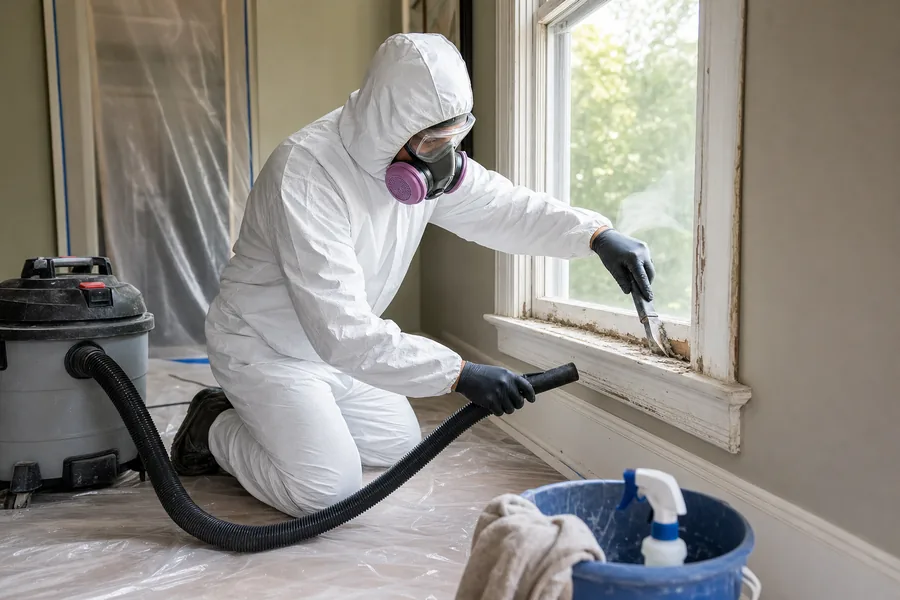
Lead-Safe Removal & Stabilization
We address deteriorated lead-based paint on windows, trim, doors, siding, and porches using HEPA-filtered tools, wet-scraping, and component replacement where appropriate. Work areas are protected with plastic sheeting, dust is controlled at the source, and surfaces are cleaned and verified — meeting CT DPH lead regulations (§19a-111-4) and EPA RRP standards.
- Certified lead-safe work practices
- HEPA vacuums & wet methods to suppress lead dust
- Containment & protection of surrounding surfaces
- Specialized cleaning & clearance verification
Protecting the People Who Matter Most
Children under six and pregnant women are most vulnerable to lead exposure. Our process is built around containing and removing hazards without spreading dust into living spaces — essential for family homes, rental properties, and child-occupied facilities subject to Connecticut lead-inspection requirements.
Landlord & Rental Compliance
Connecticut landlords face strict obligations around lead hazards in pre-1978 rentals. We help property owners remediate identified hazards and document the work to support compliance and tenant safety.
How the Job Gets Done
Assess
Identify deteriorated lead surfaces and define a lead-safe scope of work.
Protect
Set up containment, cover surfaces, and control access to the work area.
Remediate
Remove or stabilize lead hazards using HEPA filtration and wet methods.
Verify
Perform specialized cleaning and clearance to confirm the hazard is resolved.
Lead Abatement Questions
How do I know if my home has lead paint?
Homes built before 1978 are likely to contain lead-based paint. A certified lead inspection or risk assessment confirms its presence and condition. We can help coordinate testing before abatement.
What is the difference between lead abatement and RRP work?
Abatement permanently eliminates lead hazards and is governed by CT DPH. RRP (Renovation, Repair & Painting) covers lead-safe practices during general renovation. Both require certified workers when lead is disturbed — we follow the appropriate standard for your project.
Is lead abatement covered by insurance?
Coverage varies, but when lead disturbance results from a covered loss (such as water or fire damage), abatement is often reimbursable. We document the work to support your claim.
How much does lead paint removal cost?
Lead abatement typically ranges from a few hundred dollars for a single component to several thousand for whole-house remediation, depending on scope. We provide free written estimates.
Get Your Free Lead Abatement Estimate
Serving Norwich and all of Eastern Connecticut. Licensed, insured, and ready to coordinate with your insurance adjuster.